If you are searching for the “best LoRA” to download from a public repository, you are asking the wrong question for your business.
While hobbyists look for the “best anime LoRA” or “best cinematic lighting LoRA” on platforms like Civitai, forward-thinking agencies and brands know the truth: the best LoRA is the one you build yourself.
In the rapidly commoditizing world of Generative AI, using public models is no longer a competitive advantage. The real value lies in Training Custom Models. This guide explains what a LoRA is, why it is your agency’s new “defensive moat,” and how to move beyond basic tools like Midjourney to create proprietary assets.
1. What is a LoRA? (The “Mini-Brain” Analogy)
To understand why custom training is superior, we must first define the technology.
LoRA stands for Low-Rank Adaptation.
- The Analogy: Think of a massive base AI model (like Flux or Stable Diffusion) as a brilliant but generalist artist. It knows what “a sneaker” looks like, but it doesn’t know your specific sneaker.
- The LoRA: A LoRA is a “mini-brain” you plug into that main artist. It is a small, focused file that contains only the information about your specific product, art style, or character.
When you plug this mini-brain in, the AI suddenly knows exactly how to render your brand’s assets without hallucinating details.
Key Takeaway: The “best LoRA” isn’t a file you download; it’s a specialized adapter you train on your own data.
2. The Commercial Advantage: Why You Need a “Moat”
In business strategy, a moat is a defensive barrier that protects your market share from competitors.
- The Problem: If you use Midjourney or standard ChatGPT for client work, you have zero moat. Any competitor can type the same prompt and get a similar result.
- The Solution: A Custom LoRA is a proprietary asset. If you train a model on a client’s specific visual identity, you possess a tool that dat alleen your agency has access to.
Selling “Custom AI Models”
This shifts your business model from selling hours or images to selling infrastructure. You aren’t just delivering 10 marketing images; you are delivering a “Custom AI Model” of their brand.
- Client Value: “We built an AI that knows your brand guidelines perfectly.”
- Retention: The client relies on your specific model for consistency.
3. The Tools: Flux & Stable Diffusion vs. Midjourney
Many agencies start with Midjourney because the quality is high out of the box. However, for professional commercial work, Midjourney has a fatal flaw: Lack of Control. You cannot train a true custom LoRA on Midjourney’s closed system to replicate a specific product perfectly every time.
To build the best LoRA, you must move to open or semi-open weights models:
A. Stable Diffusion (SDXL / SD 1.5)
The industry standard for open-source AI. It is highly flexible and runs on consumer hardware.
- Pros: Massive ecosystem, thousands of tutorials, complete ownership.
- Cons: Requires more technical setup than Midjourney.
B. Flux
The new state-of-the-art contender. Flux is rapidly becoming the “best LoRA” base model for photorealism and text adherence.
- Pros: Incredible image quality that rivals or beats Midjourney; follows complex instructions better than Stable Diffusion.
- Cons: Requires powerful hardware (GPUs) to train effectively.
4. The Workflow: How to Train a Custom LoRA
You don’t need a supercomputer or a degree in computer science to train the best LoRA for a client. You just need a focused dataset.
The “20 Image” Rule
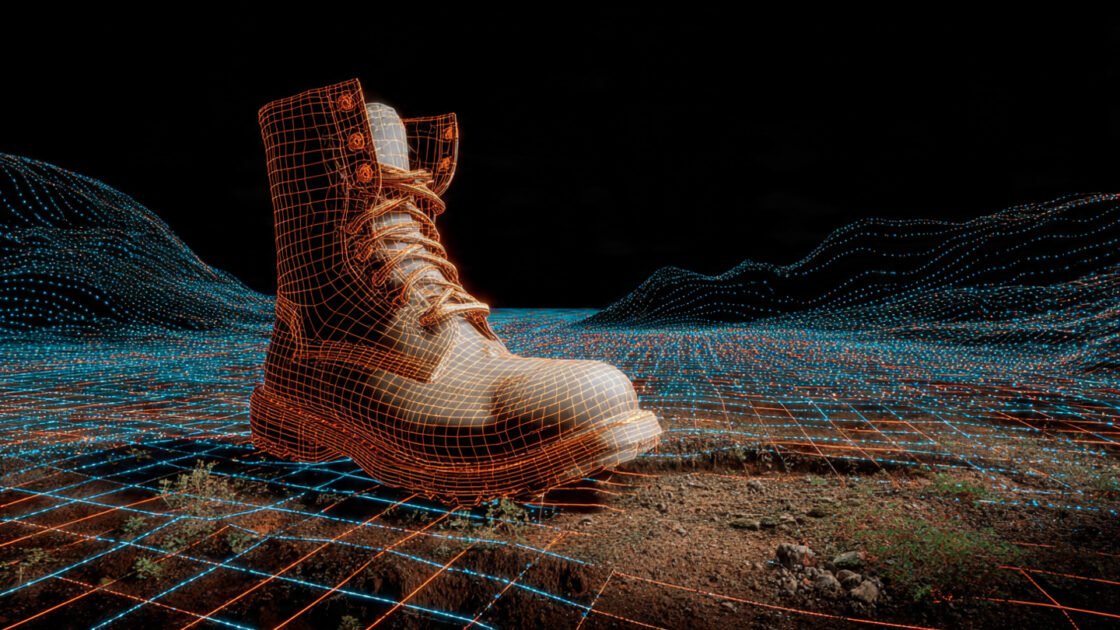
Let’s use a specific example: A Brand New Sneaker.
- Data Collection: You do not need thousands of photos. You need roughly 20 high-quality images of that specific sneaker.
- angles: Front, side, top, sole, on-foot.
- lighting: Consistent and clear.
- Training: You feed these 20 images into a training interface (using tools like Kohya_ss for Stable Diffusion or specific Flux trainers).
- The AI analyzes the consistent patterns across these 20 images.
- It compresses that understanding into a
.safetensorsfile (the LoRA).
- Inference (Generation): You load the base model + your new Sneaker LoRA.
- Prompt: “A photo of [Brand-Sneaker] running through a muddy puddle in a rainstorm.”
The Result: The AI generates the specific sneaker—correct logo placement, correct stitching, correct laces—in a situation (muddy puddle) that you never actually photographed. No Photoshop required.
5. Summary: The Best LoRA is Proprietary
To rank #1 in the eyes of your clients, stop looking for the best downloadable models and start building your own.
| Feature | Public LoRA (Downloaded) | Custom LoRA (Trained) |
| Cost | Free | Time/Compute Investment |
| Uniqueness | Low (Anyone can use it) | High (Proprietary Moat) |
| Consistentie | Varies | Exact Product Match |
| Use Case | Hobbies / General Styles | Commercial / Brand Assets |
The Verdict: The best LoRA is a Custom LoRA. It is the only way to guarantee consistency, secure a commercial advantage, and turn AI from a toy into a professional business asset.